
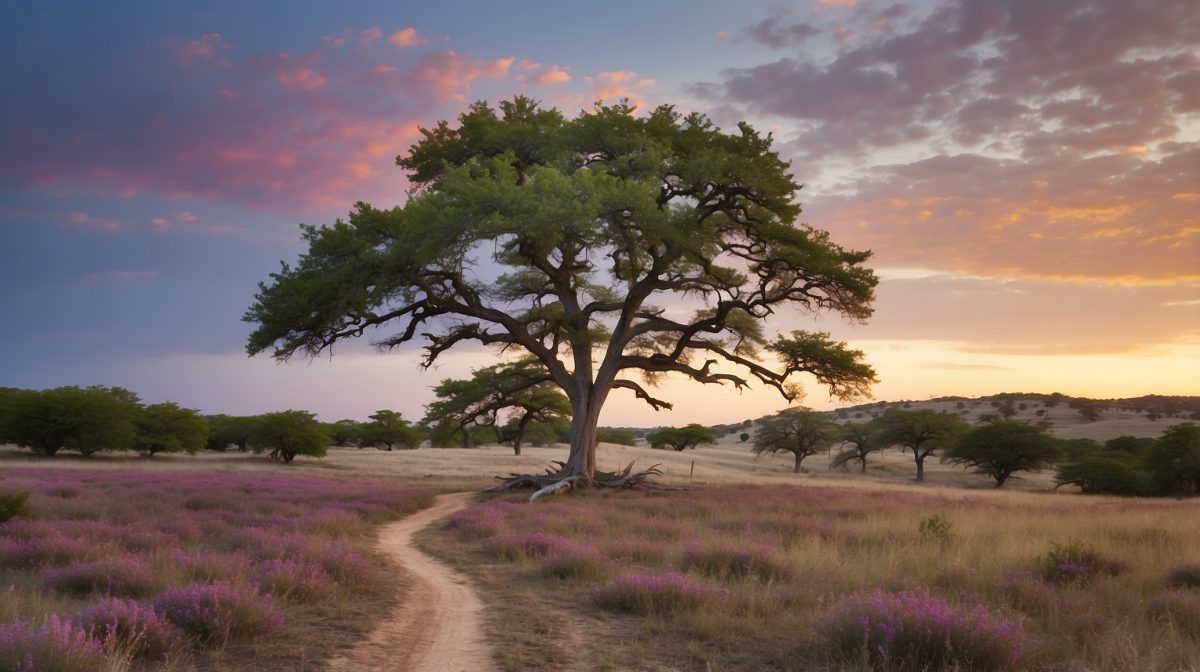
Stick around as we explore the history, types, and the downright important role these trees play in our ecosystem. It’s a journey through time and nature that’ll give you a newfound appreciation for these sturdy sentinels of the hill country.
The History of Cedar Trees in Texas Hill Country
Let’s turn back the pages of history to when cedar trees first graced the Texas landscape. It’s said that these trees have been around since before cowboys and cattle drives. Cedars have woven themselves into the very fabric of the local ecosystem and culture, standin’ as a symbol of the rugged beauty of Texas Hill Country.
From providin’ shelter for wildlife to bein’ used in traditional medicine, cedar trees have been a cornerstone of the hill country for generations. They’ve stood the test of time and weather, becoming as iconic as the Alamo itself.
Types of Cedar Trees in the Region
Y’all might be wonderin’ about the kinfolk of cedar trees in these parts. Well, the most familiar are the Ashe juniper and Eastern red cedar. These hardy species have adapted to the Texas climate and can be spotted pepperin’ the rolling hills and valleys.
The Ashe juniper, or as we like to call it, the “mountain cedar,” is a true native, with its fragrant wood and berries that feed the local critters. The Eastern red cedar, on the other hand, is a bit of an outsider but has made itself right at home, offerin’ dense foliage and rot-resistant timber.
The Impact of Cedar Trees on the Texas Hill Country Environment
Cedar trees do more than just look pretty against the Texas sky. They play a vital role in keepin’ our soil right where it should be and providin’ homes for all sorts of wildlife. But it ain’t all sunshine and rainbows; these trees are also mighty thirsty, and during droughts, they can put a strain on our precious water resources.
And let’s not forget about cedar fever – that pesky allergy that gets folks sneezin’ every year. Despite these challenges, we’ve learned to manage these trees to keep our ecosystem in a delicate balance, much like a well-played fiddle tune.
Cedar Trees and the Local Economy
Cedar trees ain’t just a pretty face in the landscape; they’re also a boon to the local economy. The wood and oil industries have found a gold mine in these trees, supportin’ jobs and pumpin’ dollars into our communities. Local artisans craft everything from furniture to ornaments from cedar, showcasin’ the versatility and beauty of this natural resource.
These trees also draw visitors from near and far, eager to experience the charm of Texas Hill Country. So, whether it’s through industry or tourism, cedar trees are helpin’ to keep our local economy as strong as a longhorn.
Cedar Trees in Texas Hill Country Culture and Traditions
Now, cedar trees are more than just part of the scenery; they’re stitched into the very tapestry of our culture. There are countless stories and legends that pay homage to the strength and spirit of these trees. Native American tribes revered them for their spiritual significance and practical uses, from building to healing.
And when it comes to celebrations, cedar trees are often at the heart of Texas Hill Country festivities, infusin’ our events with their timeless presence. It’s safe to say that these trees are a cherished part of our heritage and will continue to be for generations to come.
Conclusion
After our little trek through the woods, it’s clear that cedar trees are as native to Texas Hill Country as the stars at night. They’ve shaped the land, contributed to the economy, and enriched our culture. Understandin’ and preservin’ our natural heritage is crucial, and these trees are a big part of that story.
As a Texas Hill Country native myself, I can’t help but tip my hat to these steadfast companions that dot our landscape. Here’s to the enduring relationship between cedar trees and the folks who call this place home.
FAQs
What is the most common type of cedar tree found in Texas Hill Country?
The Ashe juniper, affectionately known as “mountain cedar,” is the most common type you’ll find in these parts.
How do cedar trees affect the local wildlife in Texas Hill Country?
Cedar trees provide essential habitat and food for wildlife, but they can also impact water resources due to their thirst.
Are there any regulations on cutting down cedar trees in the region?
Yes, there are regulations in place to manage the cutting of cedar trees to protect the land and water supply.
How can I tell if a tree on my property is a type of cedar native to Texas Hill Country?
Look for telltale signs like scaly bark, berry-like cones, and that distinctive cedar scent.
What time of year is “cedar fever” most prevalent in Texas Hill Country, and why?
Cedar fever hits its peak in the winter months, when the Ashe juniper releases its pollen into the Texas breeze.