
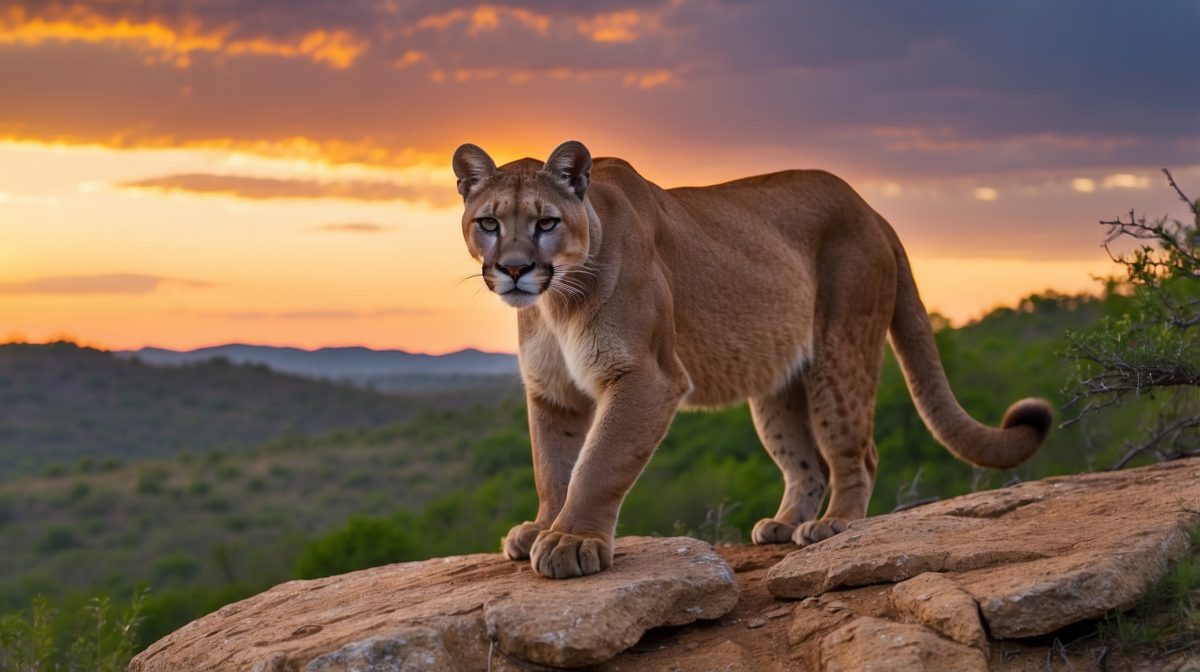
Why is it important to keep tabs on how many mountain lions live in Texas Hill Country? Well, for starters, it helps us maintain the harmony between man and nature. Plus, these big cats play a pivotal role in the health of our environment. Let’s dive into the heart of Texas Hill Country and track down the tale of the mountain lion.
Mountain Lions in Texas Hill Country
The mountain lion, a proud symbol of the wild Texas landscape, is as much a part of Texas Hill Country as the bluebonnets and live oaks. These noble creatures, with their tawny coats and stealthy ways, are the very embodiment of the untamed spirit of the land. Historically, they’ve roamed these hills and valleys, leaving only whispers and tracks behind.
Now, the role of the mountain lion in our local ecosystem can’t be understated. They’re top predators, y’all, which means they help keep other critter populations in check. Without them, we’d see a whole mess of problems cropping up in our beautiful Hill Country. So let’s tip our hats to these guardians of the ecosystem.
Estimating the Population
Counting mountain lions is about as easy as herding cats, and that’s no joke. These creatures are secretive and solitary, making them harder to spot than a needle in a haystack. The rugged terrain of Texas Hill Country doesn’t make it any easier, either. But folks around here are determined, and they’ve developed some clever ways to estimate how many of these big cats are prowling around.
Experts use methods like camera traps, track surveys, and even DNA analysis to get a bead on mountain lion numbers. The current estimates are just that—estimates—but they give us a rough idea of the population. And what the experts are saying is that while these cats are elusive, they’re definitely out there, living their best life in the Texas wild.
The Habitat of the Mountain Lion in Texas Hill Country
Mountain lions are picky about where they set up shop, and who can blame them? They need plenty of space, a good supply of food, and some peace and quiet—just like the rest of us Texans. The ideal habitat for these big cats includes dense brush, rocky outcrops, and plenty of deer to hunt.
Lucky for them, Texas Hill Country offers all that and a bag of chips. And places like JL Bar Ranch Resort are leading the charge in land management and conservation efforts, ensuring that these cats have a safe place to roam. It’s a partnership between man and nature that benefits both sides.
Human and Mountain Lion Interactions
Now, living alongside mountain lions means we’ve got to respect their space and understand how to share the land. It’s a delicate dance, but folks in Texas Hill Country have been perfecting it for generations. We’ve learned the importance of keeping a clean yard, securing our livestock, and educating our young’uns on living in harmony with these big cats.
For those worried about safety, there are tips and tricks to living in mountain lion country that can put your mind at ease. It’s all about respecting wildlife and maintaining balance. After all, these mountain lions are a part of what makes Texas Hill Country so special.
The Significance of Mountain Lions to Texas Hill Country
Mountain lions ain’t just another critter in the woods—they’re woven into the fabric of our culture and folklore here in Texas Hill Country. They represent the wild, untamed spirit of Texas and are a living link to our frontier past. Plus, they draw in folks from all over who want to catch a glimpse of Texas wildlife at its finest.
And let’s not forget the impact these majestic creatures have on tourism. They’re one of the many natural wonders that make folks fall in love with Texas Hill Country. Efforts to maintain a healthy mountain lion population are ongoing, and they’re critical to preserving the unique character of our home.
Conclusion
So, there you have it, friends—the importance of mountain lions to Texas Hill Country can’t be overstated. These creatures are as much a part of our landscape as the rolling hills and winding rivers. As we continue our efforts to understand and preserve this iconic species, we’re reminded of the majesty and significance of the mountain lion in the grand tapestry of Texas wildlife.
We’re committed to keeping the spirit of the wild alive and well in Texas Hill Country. And with each step we take to protect and coexist with the mountain lion, we’re ensuring that future generations can enjoy the same natural beauty and balance that we cherish today.
FAQs
How can you tell if mountain lions are near?
You might notice tracks, scat, or scraped areas on the ground. Also, keep an ear out for their distinctive call—it’s not something you’ll soon forget.
What should you do if you encounter a mountain lion in the wild?
Stay calm, make yourself look big, and back away slowly. Never turn your back or run, as that could trigger a chase.
How do conservation efforts impact mountain lion populations?
Conservation helps ensure a stable habitat and prey availability, which are critical for a healthy mountain lion population.
Are mountain lions in Texas Hill Country a threat to livestock?
It’s rare, but it can happen. Proper fencing and animal husbandry practices can greatly reduce the risk.
Can visitors to Texas Hill Country participate in any mountain lion research or conservation programs?
Absolutely! There are opportunities to get involved in wildlife tracking and conservation efforts, especially with local ranches and wildlife organizations.